Tuesday, 23 September 2014

How to Effectively Use Social Media for Blog Interaction?

Social media is something that every blog would require in order to grow their reader base.
With the ability to concentrate on a wide userbase and their problems, social media works like a magic wand. If this magical wand is used appropriately, it can make your blog readers stick with you for long.
Let’s see how you can effectively use social media such as Facebook, LinkedIn or Twitter for blog interaction.

 Advantages of Using Social Media for Blog Interaction

There are three:
  • Provides common interface to interact with various users through social media.
  • Readers are actively using social media.
  • It has the ability to bring in valuable readers.

How to Effectively Use Social Media for Blog Interaction?

Now, it’s time to talk about the strategies that you should follow in order to gain interaction from your followers.
Social Media to Increase Blog Traffic

1) Investment of Time in Social Media

Most of the readers are already active on social media and investing your time in the interaction with them would give beneficiary results.
Before investing your time, you must get some knowledge, do research and find out what are the techniques that are best suitable your blog. What are the ways that are making your blog interaction more productive? What is the time when you get most reactions/interaction from your readers?
These are the questions that you should ask yourself before investing your valuable time.
Once you’ve the answers to such questions, you yourself would be able to decide on number of hours that you should allot to your social media blog readers.

2) Presentation

There are quite a few techniques to present your or start your interaction. The best way to know which techniques are working out – TRY THEM ALL!
For example, when Facebook comes in picture, a simple status update might not get attention but a status update along with an eye catchy image might attract attention and trigger your interaction. In case of Twitter, there aren’t many choices left but what about having a catchy headline?
This task isn’t simple but requires thorough trials. Things that did work in the past for one social media may not work for another. You got to keep trying and at the same time, keep an eye on which style worked well.

3) Meaningful Reader Interaction

At the end of the day, what counts is that the blog readers are satisfied with the kind of content delivered by your blog. Focus on making the content reader-friendly and engaging.
Once the reader initiates interaction, you should ensure to make it lively.

Endnote

Social media is driven by PEOPLE who are eventually your blog readers. If they like your blog engagement then there is a possibility of spreading word about the same.
You must be aware how important a Facebook Like is? If gone viral, it can reach thousands of people in few minutes. In the same way, other social media platforms also have their own advantages. The only thing you need to dig in is how to use them perfectly.
The biggest mistake most of the bloggers make is sharing on social media without knowing what their readers love.
Finally, I would simply suggest to research thoroughly and put your time and money on the right strategy to build and manage blog reader relationship as it is the backbone for the blog’s success.
Use every social media network at your disposal.


Sunday, 21 September 2014

The Social Shake-Up 2014 Recap

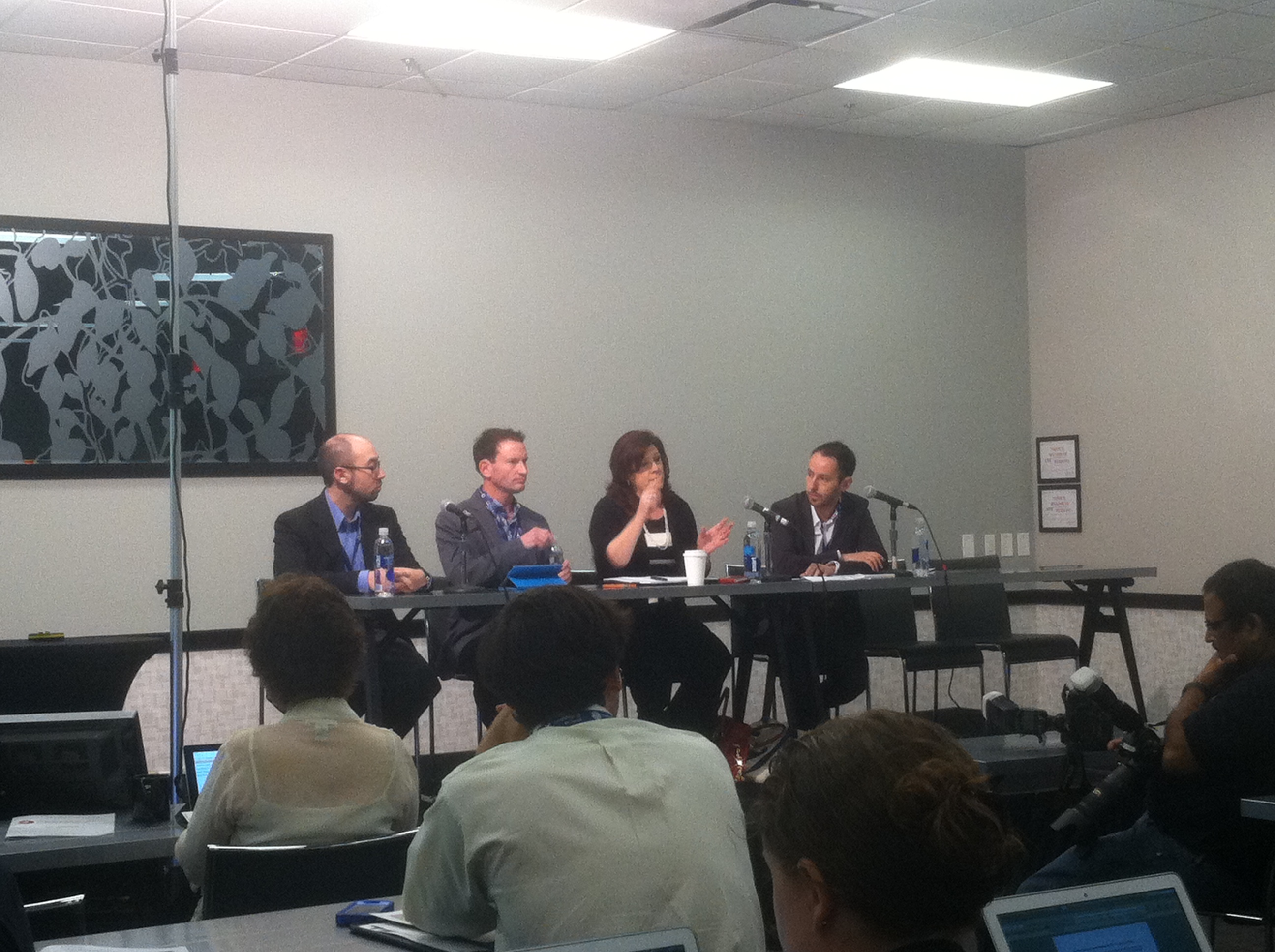
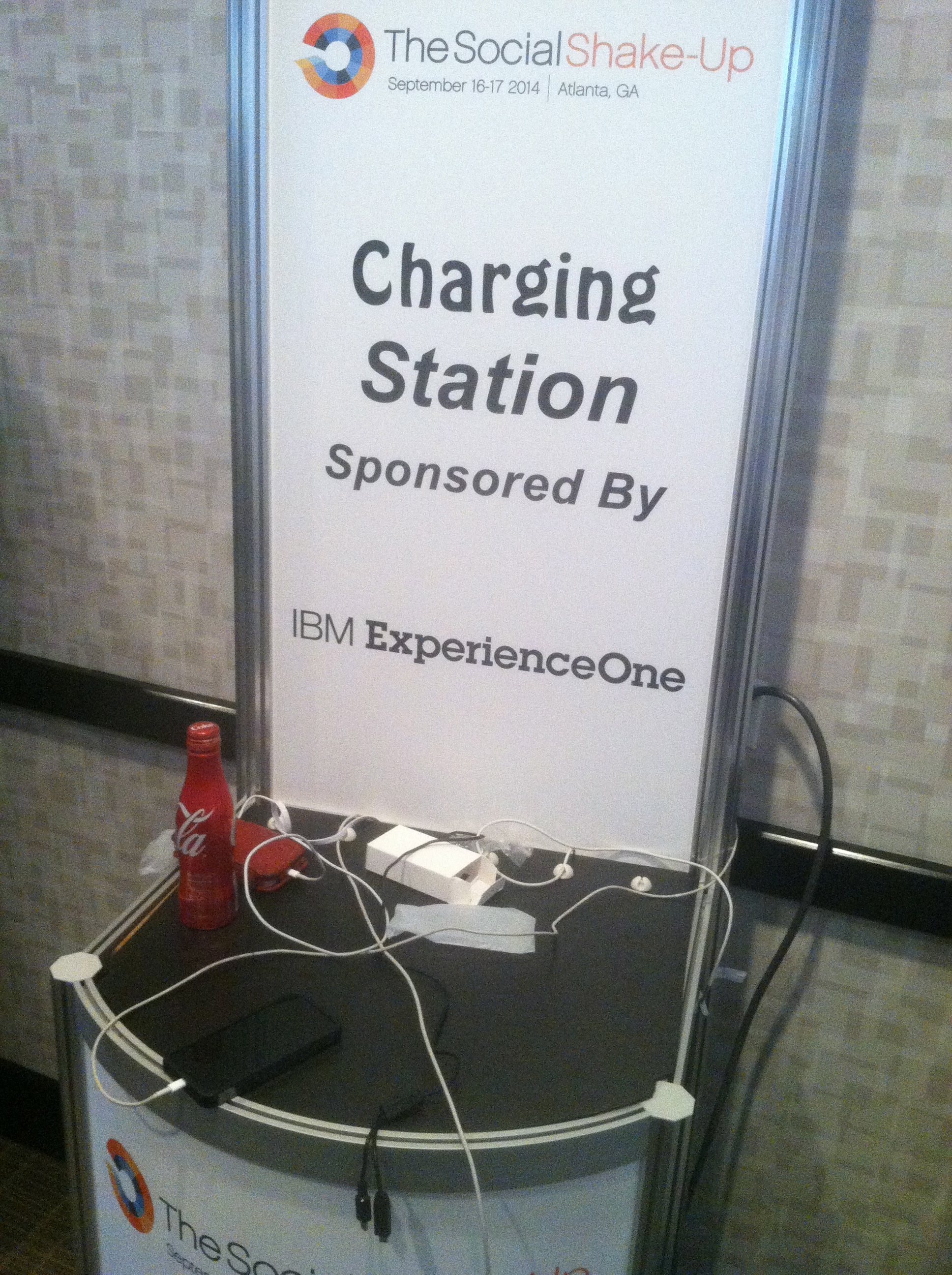
This week I was at the W Midtown Hotel in Downtown Atlanta for Social Media Today’s Social Shake-up Conference. I knew to expect a great event as this was my second Social Shake-Up, following the Social Media Today event in Austin during SXSWi in March. So, let’s get to it. Disclaimer – Most of these notes will be from just one panel. Also – please excuse my phone’s picture quality. Can’t wait for the iPhone 6, also to avoid spending most of my time charging during events.
Guess I Should Have a Portable Charger By Now?

10:30am Data & Creativity: Defining Your Data-Driven Social Campaign

Laurent Francois moderated the panel consisting of Adam Naide (Cox Communications), Tracy Bell (Bank of America), and David Schweidel (Emory University)
Adam Naide Panel
This panel explored creativity and data, and their combination for deeper story telling. Also discussed was social analytics, and the importance of having clear goals in social media campaigns. Laurent began by apologizing for his French accent, and the way he pronounces “Adam,” although both Adam and I agreed it was a nice twist on the American pronunciation. Once the discussions were underway, Adam was quick to note the heavy lifting and social listening done by his Cox social care team, including Frankie Saucier, who I had the pleasure of sitting next to during the panel. Make sure all interactions are handled, and handled correctly – your brand sentiment is on the line! Consumers connect around their passions and creativity, social connects the two. David, with a background in statistics and market research, explained how he’s basically paid to be a skeptic. David piggy-backed and agreed with Adam’s thoughts on how to best engage with customers, and that the right way has yet to be determined. How do we engage customers at each touch-point?
Tracy noted that social can fill your gaps in customer service, as well as aid in sales and lead generation. Perhaps my favorite quote from this panel came from Adam when asked about social media tools, though. He stated, “Tools are tools, but people run social [media]. That’s why it’s called social media.” Adam went on to discuss how Cox customers who are engaged on social media are 33% more valuable than a typical customer, and score 32 points higher in NPS (net promoter score). The goal here is to turn your social customers into advocates! Another interesting note from Adam came in that social is now the first place people go for customer servicing. It can’t be any simpler than sending a DM, and seeing immediate resolution (again, props to the Cox social care team). Imagine a world where social media is the #1 place to go to seek technical support, and where brand advocates reply and assist even before the brand can.
What do you think when you hear the words engagement and organic? You probably think it’s just some marketing buzz word lingo, but you’ll be happy to hear that Adam Naide agrees with you. If he had it his way, he’d retire these words because they’re “fluffy and everyone has a different meaning for them.” Agreed!
An early takeaway from this panel was that customer’s comments and thoughts are incredibly valuable social offerings. Cox ran a Facebook brand campaign with Nielsen to promote that Cox has doubled their internet speeds. By reading comments and listening to what customers thought Cox was able to gather feedback in their customer’s context that they would’ve otherwise never known.
Tracy pointed out that your social media efforts support your creative processes. Listening to people and seeing how they react to your advertising is invaluable! How are they talking about the music in the background of a video? What do they think about the imagery? These are good to know data points gained through social that you may otherwise over-analyze. Feedback is different when it’s live.
The panel went into a great discussion on feedback, and Adam actually played moderator for a bit, asking Tracy the questions. The takeaway – find real reactions buried in data. Use what you have and bring it back to a simple human reaction.


Adam then quoted Maya Angelou. “I’ve learned that people will forget what you said, people will forget what you did, but people will never forget how you made them feel.” I love this, and the same goes in social. Your followers may associate with you because of one emotion-bringing post, but never actually remember what it was. This relates, in a way, to Cox’s social strategy of using content like Game of Thrones as click bait, with an ultimate call to action behind it. Adam knows that Cox’s fans share clear emotions about their shows, so why not go where they’re already talking and sharing feelings? Another great example comes through the World Cup earlier this summer. Cox curated simple posts around existing conversations, just letting people know how to catch the games on their phones at work. Genius. Speaking of Game of Thrones, look who favorited one of my live-tweets…

Friday, 19 September 2014

How Secure Is Your Password?

First Adobe and now Gmail?
If you’re not familiar with the latest privacy scandal that’s got the world on edge, just last week it was discovered that over 5 million Gmail usernames and passwords have apparently been leaked and shared on a Russian Internet forum.
Slightly unnerved? Freaking out?
You wouldn’t be the only one.
Password protection has become a hot topic in recent months, what with the leak of naked celebrity selfies and the constant threat that one wrong click will send our most private of communications into the wrong hands.

So what can you do about it?

Well, let’s just say that cold turkey isn’t an option. We’ve all become just a little too entrenched in the digital world to start pushing for a complete withdrawal.
The truth is, now everything from paying your bills to RSVPing to your friend’s wedding will probably take place online. There’s very little we can do to completely remove ourselves from the influence of the internet.

Prevention trumps avoidance

Knowing that simply closing up shop and permanently absconding yourself from the internet isn’t an option, the onus now comes down to you making an effort to adequately protect yourself.
Just as we get insurance to cover our houses and cars, passwords are a form of protection to keep safe our online information.
So for heaven’s sake, don’t take them lightly!
With the rise of cloud-based platforms, more and more people are entrusting their treasured photos, personal emails and private documents to the security of 8 or more characters.
Why not make the most of those 8 characters?
In the wake of the Adobe password scandal that rocked the digital world, Mashable published a piece listing the 20 most popular passwords used by Adobe customers that had been hacked.
No surprises, some of the offenders featured in the Top 10 were the all to familiar ‘password‘ and the classic ‘1234

How do you protect yourself from a password hack?

Get creative with the shift button and start adding a variety of numbers and symbols to your passwords.
If you find that tricky to remember, substitute numbers or symbols for letters that look similar (i.e. m@keb3le1ve instead of makebelieve)
Are you one of those people that uses the same password for their internet banking as they do for their Facebook page? Well, I’ve got three words for you: stop doing it!
If someone hacks just one of your accounts, they will literally find themselves with all-you-can-eat access to a smorgasbord of personal information.
I cannot stress the importance of ensuring you use a variety of passwords online. Having the same password across multiple platforms is like building your security on a house of cards, if one falls the rest quickly follow.
I know it’s a pain, but so is having the entire contents of your iPhoto folder shared with the world. Set yourself a calendar reminder to change passwords periodically so that if any account is compromised, it doesn’t stay that way indefinitely.
A fantastic security measure that is definitely worth the hassle of setting up. Several services now offer two-factor authentication to protect yourself from a remote hack.
Google offers two-factor authentication with a handy Google Authenticator app that automatically generates unique codes on your tablet or smart phone.
Everyone knows your maiden name or your husband’s date of birth. And even if they don’t, those answers are pretty easy to find out with some basic snooping.
Go for something that’s more subjective, a favorite teacher or best childhood friend. That way, even if someone was familiar with all the names of your high school faculty, they still wouldn’t know which one was your top teach.
Keep em’ guessing!
  • Numbers and symbols are your friends
  • Don’t use the same password across different platforms
  • Change your password every couple of months
  • Start using two-factor authentication
  • Make those password recovery questions tricky                                                                  

Tuesday, 16 September 2014

Social Media Tips #3 | How To Use Google Plus For Business SEO| Social Networking Marketing Tricks

The 7 Elements Of An Optimized Twitter Profile [INFOGRAPHIC]

Twitter has revolutionised marketing for brands of all shapes and sizes across almost every industry around the globe – used intelligently, this deceptively simplistic microblogging platform can raise awareness of products and services, drive website footfall and generate leads.
For best results, businesses should ensure that their Twitter profile is optimized and that they are following best practices to maximise return on investment (ROI). This would include:
1. Using your company logo as your Twitter avatar
2. Using your company name as your Twitter username
3. Trying to tweet 5-20 times per day (every day!)
4. Always being sure to tag/mention relevant users in tweets
5. Using shortened links with tracking (i.e., bit.ly)
6. Using high quality images
7. Making sure that all responses are timely and relevant

Check the visual below for more detail, which comes courtesy of Hubspot.

Monday, 15 September 2014

How to Find Your Target Audience on Instagram


Whatever your goals are on Instagram, if you’re using the platform to market your business in any way, you need to make sure that you’re reaching your target audience on Instagram.
But how do you find them? Where are they? How are they using Instagram? How do you reach out to them?
Here are some ways to go about finding your target audience on Instagram and actually connecting with them.

Follow Event Hashtags

Whatever your industry, there are events related to it. They could be conventions or conferences. They could be seminars or announcements. They could be shows or celebrations. Whatever your events are, find the event hashtag(s) and follow them on Instagram.
For me, being that my target audience is business owners and entrepreneurs looking to learn social media, I follow social media conference hashtags closely. The Content Marketing World (#cmworld) conference just happened recently. I checked the hashtag on Instagram daily to find ideal target Instagram users.
I recommend you do the same, for whatever your industry events are.
But you have to do more than just follow the hashtag. You have to be active. It can be as simple as liking a bunch of photos tagged with the event hashtag. Go through the stream and “like” photos and posts.
Take some time to read the captions of the posts and engage in response. Answer a question. Offer a helpful piece of advice. Compliment the user. Or ask them a question about the event.
Taking the time to engage with these event attendees will usually result in a significant bump in those who follow you – and best of all, they’re your target audience!
With the recent #CMWorld event, I garnered about 10-12 new followers in a couple days. Other events I’ve used this method with have easily resulted in 20-30 new followers in a couple days.

Follow Interest or Hobby Hashtags

Much like the method for event hashtags, follow hashtags related to hobbies or interests that are relevant to your business.
If you provide health and nutrition coaching, follow tags related to health, like yoga, or pilates, or barre, or P90X, etc. If you sell pet specialty items, follow tags related to pets, pet fashion, grooming, etc.
Knowing your target demographic, you should know what they are interested in. Use this information to find those people on Instagram. Then use the same methods I just described above to engage, like, and have conversations with them.

See Who’s Following Your Competitors

If you’re looking for your target audience on Instagram, chances are they’re already engaging with and following your competitors. This makes it easy – they’re in one place.
Go to your competitors’ profiles, and click on their “Followers”. You can see the whole list of people who follow them. Depending on how many people follow them, this could be more time intensive than other accounts.
Scroll through the list of followers and find people that are your ideal clients. Look for people that are active, engaging, and match your ideal customer profile. Then scroll through their posts, like some of their posts, and join in the conversation by responding to comments, complimenting them, or answering a question.
This method is more time consuming than following hashtags but works just as well.

It’s important that you have the right, engaged followers on Instagram. Having 5000 followers who don’t care about your business or who never actually use Instagram are useless to you. Instead, focus on finding and building relationships with your ideal target customer to see real results on Instagram.

Sunday, 14 September 2014

4 Ways To Make Readers Come Back For More June 24, 2014Social Media

Blogging isn’t exactly easy. Some people try to make it out as something anyone can do well. Sure, anyone can set up a blog and update regularly, but
Not everyone has the power to capture the attention of their audience and make them read more.
You always hear about bounce rate, and you always hear them say that your site must have a low bounce rate. But how do you do it exactly? How will you make people click another link on your site? How will you engage them to read on and to come back for more blog posts? How will you convert them from visitors to actual readers?
There’s no shortcut here. There’s no easy tricks that you can accomplish in under five minutes. It’ll take you time and a lot of patience, but once you’ve established your site, there’s a bigger chance to grow your audience and encourage them to drop in again and again.

1. Write Informative And Compelling Content

It’s always the content that will attract the readers. It’s not in the amount of times you post in a week that makes people go to your site. It’s the quality of the content that people will actually visit your website. Though you may update regularly, people may not be interested if they didn’t like what they read the first time. So make sure that each and every article you write is made of quality.
No one expects you to be the Mark Twain of the blogging world, but at least make your posts worth their time. You wouldn’t want to read comments saying that you’ve just wasted 15 minutes of their time, do you? Just give every piece of article enough attention and care when writing. Research your content and find an angle that’s interesting, something that hasn’t been tackled repeatedly by other sites. Make sure that you provide content that they will actually read instead of just skim.

2. Proofread Thoroughly

You don’t need to have a perfect grammar. You just need ample time to re-read and proofread your work. It’s not just in the grammar, too. Oftentimes, it’s the spelling and wrong information that reduce the credibility of an article. Double-check every fact you include in the post or people will call your bluff for it. It’s not enough that you read it once. If you have to let someone else re-read it for you, then do so.
A tip on editing: Read it out loud.
It’s very easy to miss mistakes, and sometimes, the only way for you to notice them is if you re-read your work thoroughly. Writers are often blind to their own mistakes, so it won’t hurt to be too cautious. No one would want to go back to a site that posts articles peppered with too many grammatical errors.
If you’re still not confident with your writing, there are many online tools that can help you proofread your works. However, these tools only focus on the mechanical side of editing such as spelling, grammar, and syntax. Technical editing is a lot more complex, and oftentimes, you’re the only one who can do it.

3. Encourage Your Readers To Subscribe And Follow Your Social Media Accounts

Now, it won’t be easy to entice readers to directly drop in your site regularly. If you think they’ll type in your site’s URL everytime they log in, then I’m afraid I have to dash your hopes. First you have to find a way that will easily help them find you.
One way to do that is by encouraging them to subscribe to your updates. Many readers don’t like receiving too much email updates, so it’s best if you give them the chance to choose whether to receive daily or weekly updates. Place the subscribe button prominently on your website. The trick is placing it on the top of your site instead of having readers look for.
[Note from Editor: Our subscription box is located top right.]
Do it via social media. Make sure that your social media buttons are prominent in your websites. Though no one appreciates a pop-up box, during the early stages of your blog, it might be to your best interest if you do this. However, remember that to use social media effectively, you have to update it often, too. Answer queries and share useful links to your followers.
Don’t forget to share old articles to also drive traffic to old pages. Engage your readers by posting about things that interest them. Keep your social media pages alive even when you don’t have an update for that day.

4. Create An Easy-To-Navigate And Readable Website

This is often neglected by many website owners. They’re so keen to publish as many post as possible. They focus so much on SEO and how the search engine will read their site that they forgot that they also have to think of their readers. Is the text easy to read? Are there enough white spaces to let the eyes breathe? Are the buttons easy to find? Does the page load fast enough? Are the graphics loading properly?
Before web masters worry about Google, they have to think of the readers first. After all, they must write for humans, first and foremost, before they write for machines. It’s great if you can figure out how Google works, but there’s a delight to know that you’re gaining readers due to the fact that they actually your website.
It’s great to know how to drive traffic to your site. But the next step is to make the visitors stay and the harder part is to make them come back.
Readers are very difficult to please
so you must exert an effort to make sure that you capture their attention. Besides, it’s the frequency of their visits that make them actual readers and not just visitors of your blogs. It’s a lot better if you aim to increase your readership and not just the number of view count.


[Image: iStockphoto]